Cornea Specialist in Indore — Keratoconus, Corneal Transplant & Cross-Linking
Your journey to clarity begins here
Your premier destination for comprehensive cornea care in Indore. Our dedicated team of experts specializes in a wide range of services, including cornea correction surgery, cornea treatment, and more.
Clarity restored here
How does cornea affect you?
The cornea is vital for clear vision, focusing light onto the retina. Damage or diseases affecting the cornea can lead to blurred vision and discomfort. Changes in corneal shape contribute to common refractive errors like myopia and hyperopia. Treatment options, including surgery or medications, aim to restore clarity and maintain optimal eye health.
Our Services
Cornea Treatment
Restoring clarity, overcoming infections, injuries, and diseases for optimal vision and eye health with cornea treatment
Corneal Transplant (DALK & PKP)
Partial or full-thickness replacement of a scarred or diseased cornea with donor tissue.
C3R / Cross-Linking
Strengthens a thinning keratoconic cornea to stop progression and avoid transplant.
IPCL / Phakic Lens
Implantable lens for high myopia or thin corneas where LASIK is unsafe.
OSSN & Pterygium Surgery
Removal of ocular surface tumours and growths with graft reconstruction.
PTK Laser
Excimer laser for surface scars, recurrent erosions and dystrophies.
Corneal Ulcer & Infection Care
Scraping, culture-guided therapy and emergency management of infective keratitis.
Are You facing any
Cornea Issue?
-
Blurred Vision
Difficulty seeing clearly or focusing.
-
Eye Discomfort
Pain or burning, especially when blinking.
-
Light Sensitivity (Photophobia)
Discomfort in bright environments.
-
Dry Eyes
Gritty sensation, dryness, or excessive tearing.
-
Visual Decline
Gradual or sudden vision loss, potential halos or night vision issues.
Sight Renewal with Cutting-Edge Cornea Technology
We offer state-of-the-art corneal transplant procedures, ensuring that you receive the best possible care to restore your vision. Our commitment to excellence extends to innovative treatments such as corneal cross-linking, designed to halt the progression of corneal disorders and preserve your eye health.
Advanced Corneal Procedures at Antardrashti Netralaya
Dr Prateek Tiwari is a fellowship-trained cornea surgeon offering sub-specialty procedures that are rarely available outside metro cities. All procedures are performed in-house at Antardrashti Netralaya, Scheme 140, Indore.
DALK & PKP — Corneal Transplant in Indore
For keratoconus, corneal scars and dystrophies. DALK (deep anterior lamellar keratoplasty) keeps your own inner corneal layer, lowering rejection risk and making the eye stronger long-term; PKP (penetrating keratoplasty) replaces the full cornea when deeper layers are damaged. Both are performed in-house with donor tissue sourced through registered eye banks.
C3R — Corneal Cross-Linking for Keratoconus
A 30–45 minute outpatient procedure that uses riboflavin and UV-A light to stiffen the cornea and halt keratoconus progression. Best done early — ideally when the scan first shows progression — so most patients can avoid a transplant later. Teenagers and young adults with frequently changing glasses numbers should be screened.
IPCL — Phakic Lens for High Myopia
When your number is too high or your cornea too thin for LASIK, an IPCL (implantable phakic contact lens) is placed inside the eye in front of the natural lens. It corrects up to about −30 D, is reversible, and leaves the cornea untouched. A detailed suitability work-up is done before surgery.
OSSN & Pterygium Surgery
Ocular surface squamous neoplasia (OSSN) is a tumour on the eye’s surface that is often mistaken for a simple pterygium. We manage it with excision using a no-touch technique, adjuvant chemotherapy drops where needed, and amniotic membrane or conjunctival autograft reconstruction. Pterygium removal with autograft keeps recurrence low.
Recovery Process
-
Rest and Protect
Allow your eyes to rest and protect them from excessive light.
-
Medication Compliance
Follow prescribed eye drops and medications diligently.
-
Activity Restrictions
Avoid strenuous activities and refrain from rubbing your eyes.
-
Scheduled Check-ups
Attend follow-up appointments for progress monitoring.
-
Expect Gradual Improvement
Be patient; vision improvement occurs gradually.
-
Long-Term Vigilance
Wear sunglasses for eye protection, and contact your doctor if any concerns arise.
Eye Care Videos
Cornea Videos
Dive into a world of knowledge with our educational videos, designed to enlighten and empower you on various aspects of eye health and vision care.
-
कोर्निया,कैटरेक्ट और लेसिक सर्जन क्या काम करते हैं?
-
पुतली(कोर्निया) के छाले का सर्जरी से सफल इलाज।
-
आँखो के छाले का सर्जरी से सफल इलाज।
-
कोर्निया ट्रांस्प्लांट से पायी खोयी हुई रोशनी।#cornealtransplant
-
कॉर्निया ट्रांसप्लांट से जुड़े कुछ सवाल| Patient queries on Cornea Transplant #cornealtransplant
-
पुतली के मरीज़ों के कुछ सवाल।#cornea #corneatransplant
-
पुतली के मरीज़ों द्वारा पूछे जाने वाले सवाल।#cornea #corneatransplant
-
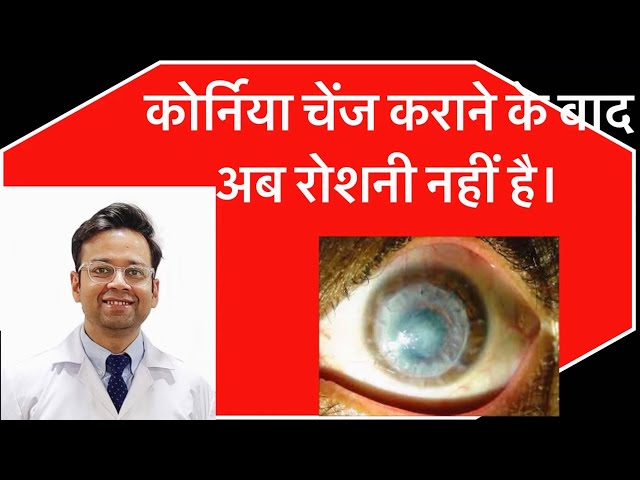
कोर्निया ट्रांस्प्लांट के बाद अब नहीं दिखता।#cornealtransplant #cornea
FAQ
General Question
Facts about cornea treatment you should know.
Cornea transplant costs in India can vary based on different factors like corneal condition, donor selection, surgical technique, recovery and rehabilitation, risks and complications, visual outcome, research and advancements, etc.
Corneal transplants, or corneal grafts, have a high success rate due to the body's low tendency to reject corneal tissue. The cornea lacks blood vessels, reducing the immune response and increasing the likelihood of a successful transplant.
Corneal thinning can result from conditions like keratoconus, where the cornea progressively becomes thinner and bulges forward. Other causes include trauma, genetic disorders, and certain eye diseases.
Yes, corneal ulcers can be dangerous, potentially causing vision loss. They are treatable with antibiotics or antifungal medications, and severe cases may require a cornea transplant.
Recovery time varies, but full benefits may take up to a year. Risks include infection, rejection, and astigmatism, necessitating regular follow-ups and post-operative care.
In some cases, contact lenses may be used after a corneal transplant to correct vision. However, this decision depends on the individual's eye health and the recommendation of the eye surgeon.